One number. Answered by Lanes nurses. Treated by Lanes vets. Day or night, every day of the year.
Answered by our own Lanes team, day or night, every day of the year. The phone goes through to Garstang, where our nurses on duty and on-call vet are based.
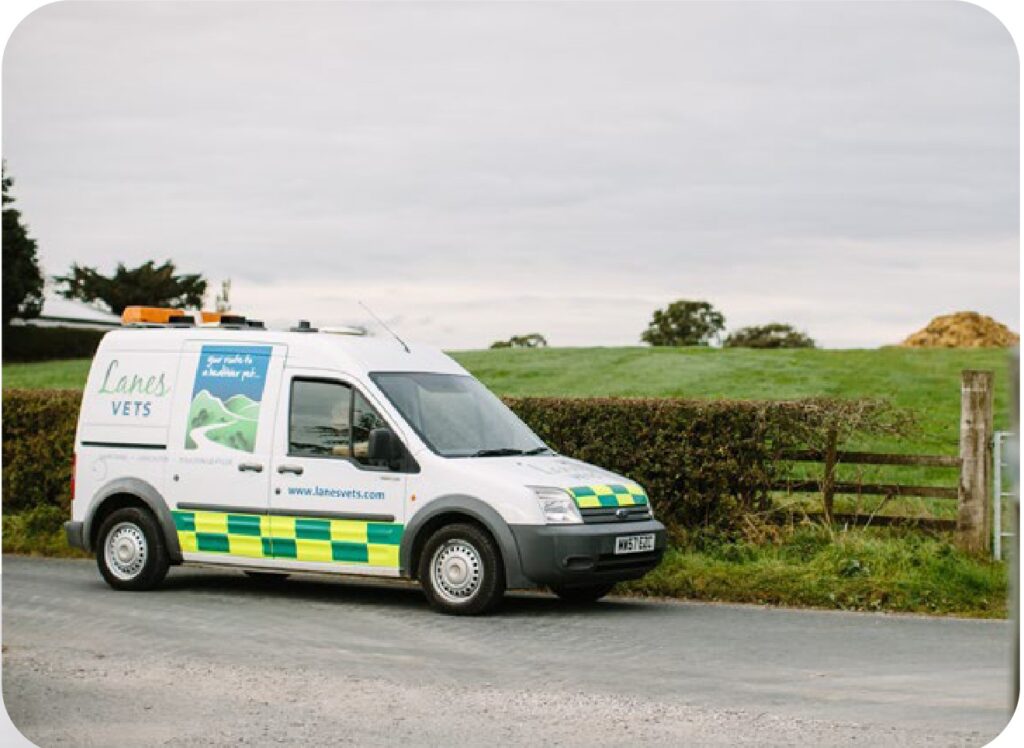
Lanes is one of the few practices in the region that runs its own out-of-hours service. When you ring outside surgery hours, the call still rings the same Lanes phone, you still speak to a Lanes nurse, and the on-call vet who sees your pet is part of our team.
If you can get to us, please head to the Garstang surgery. If your pet cannot be moved, talk to the on-call team and they will advise on the best next step.
If you suspect poisoning, do not try to make your pet vomit unless we have told you to. Bring the packaging if you have it.
If you are ever unsure, call. We would always rather hear from you than have you wait.
Open-mouth breathing in cats, blue gums, distressed panting or any noisy laboured breathing.
Hit by a car, fall from height, dog fight, any visible significant injury or bleeding that does not stop.
If your pet has eaten chocolate, grapes, raisins, onions, xylitol, antifreeze, slug pellets or unknown plants.
Restless, swollen tummy, unproductive retching in a deep-chested dog. Time-critical.
First-ever seizure, repeated seizures or any seizure lasting longer than two to three minutes.
Male cats straining to urinate. Birthing difficulties. Eye injuries. Collapse. Severe lethargy.
Concerned about your pet? Does your pet need to see us and how urgent is it? Use the symptom checker below to help you decide. In a true emergency, always ring us first.
VidiVet gives our registered clients video access to a veterinary professional, any time. Sign up with your branch:
More about VidiVet